
Multiocular O
One special letter. Used once. In one sentence. In one document. In a dead language.

The Multiocular O (ꙮ) is a unique glyph variant of the Cyrillic letter O found in a single 15th century manuscript, in the Old Church Slavonic phrase “серафими многоꙮчитїй” (abbreviated “мн҇оꙮчитїй”; serafimi mnogoočitii, “many-eyed seraphim”). It was documented by Yefim Karsky in 1928 in a copy of the Book of Psalms from around 1429, now found in the collection of the Trinity Lavra of St. Sergius.
The character was proposed for inclusion into Unicode in 2007 and incorporated as character U+A66E in Unicode version 5.1 (2008). The representative glyph had seven eyes and sat on the baseline. However, in 2021, following a tweet highlighting the character, it came to linguist Michael Everson’s attention that the character in the 1429 manuscript was actually made up of ten eyes. After a 2022 proposal to change the character to reflect this, it was updated later that year for Unicode 15.0 to have ten eyes and to extend below the baseline. However, not all fonts support the ten-eyed variant as of June 2024.
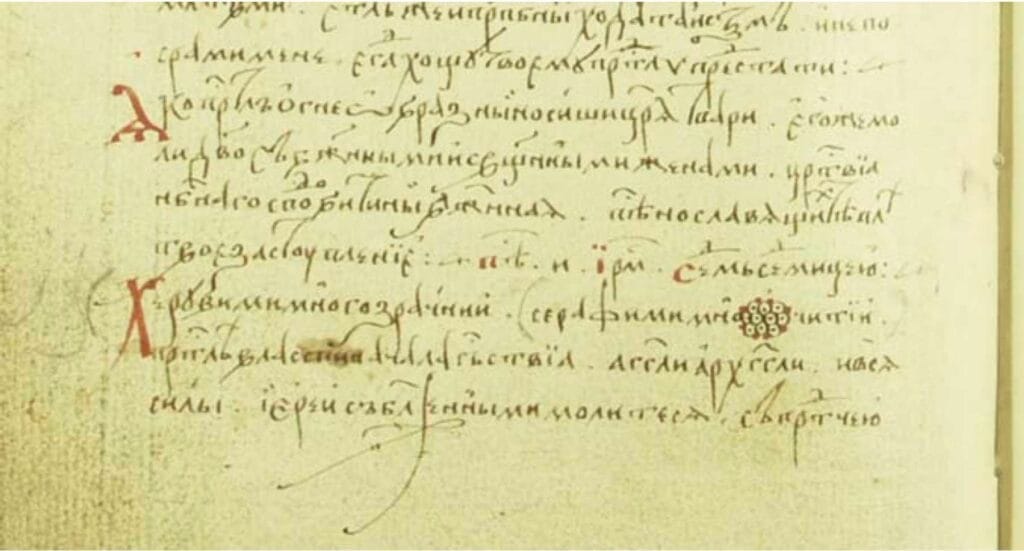
The Multiocular O in context
This is an entry in the Commonplace Book of Sparkwood and 21. A commonplace book is a personal compilation of knowledge, ideas, quotations, and observations collected by an individual. Feel free to link and reference any entries you find useful.